
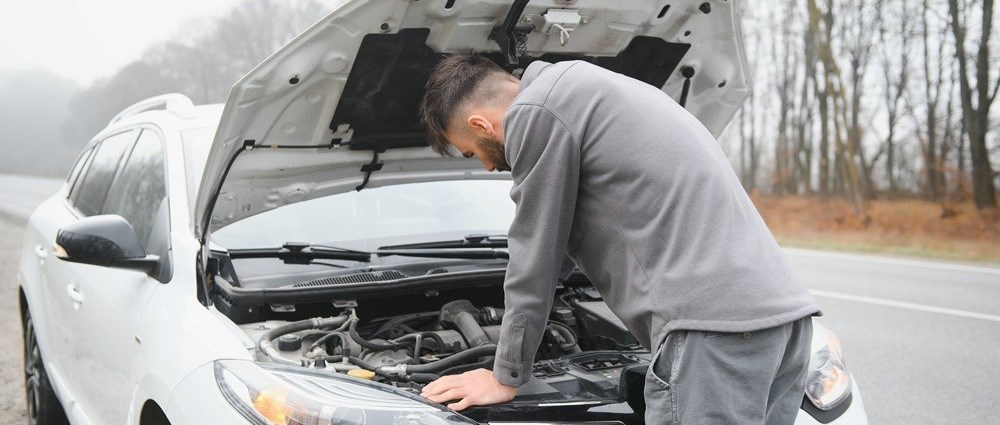
Test your confidence in basic car maintenance
You don’t need to be a car expert to look after yours. A few simple checks can help you feel more confident, keep your car safe and roadworthy and prevent small problems from becoming big repair bills.
The driving test ‘show me, tell me’ questions1 are a helpful way to test your knowledge, particularly the 14 ‘tell me’ questions about car maintenance. They cover practical checks, from telling the examiner how you’d check the brakes work before starting a journey to how you’d make sure the brake lights work.
You might be surprised by how much you recall – and if you’re unsure, you’re certainly not alone.
How confident are you in car maintenance?
If car maintenance feels less doable than it was, there’s a reason. Modern vehicles often use computer-controlled systems and complex components, which can make even familiar jobs feel daunting. In an Autotrader survey,2 74% of drivers felt cars were becoming harder to maintain, affecting their confidence.
Most of the driving test ‘show me, tell me’ questions sound technical, but they boil down to looking at rather than fixing something and knowing what ‘normal’ looks like. Here are a couple of examples:
- Question 1: Tell me how you’d check that the headlights and tail lights are working.
Answer: I’d switch them on and walk around the car to check they’re on. - Question 2: Tell me how you’d check that the engine has enough oil.
Answer: I’d find the dipstick/oil level indicator and check the oil level against the minimum and maximum markers.
If you’re worried about getting a car check wrong, start small. Follow your vehicle handbook and take your time. For basic maintenance, a willingness to try will take you far.
How often should you check your car?
Car checks can easily slip down the list when life gets busy. A recurring diary reminder can take the pressure off. Along with a full service and yearly MOT, we recommend you stay on top of checks every week and month using this guide. It’s worth repeating these checks before a long journey.
Weekly |
Monthly |
| Tyres – check the pressure and look for cuts, stones or bulges in the rubber | Brake fluid – check under the bonnet to see if it’s at the correct level |
| Engine oil – pull out the dipstick, wipe it and check the oil level | Battery – check the terminals are clean. Top up with distilled water if it has a filler cap. |
| Top up coolant so it’s between the min and max lines. Top up the screen-wash level, too. | Wipers – run your finger along the rubber edge to see if they are worn and replace2 if needed |
| Lights – walk around the car checking that all the lights and indicators work.3 |
Belts – look for any cracks or leaks in engine belts and rubber hoses |
Regular checks help you catch problems early when they’re usually easier to manage, but they can’t prevent every issue – a random loose stone can still chip your windscreen.
Many insurance companies, including ours, may repair small chips at no charge, depending on your policy. Chips up to 40mm across can often be repaired. However, damage larger than 10mm in the driver’s line of sight can result in an MOT failure.3
Why you shouldn’t ignore a dashboard warning light
Seeing a warning light can be unsettling because it’s your car’s way of telling you something’s wrong. Some lights simply show a system is active, while others flag a fault. The colour tells you how urgently you need to respond.
-
Red
Signals a serious problem that may make the car unsafe. Stop as soon as you can safely, switch off the engine, and contact a mechanic or breakdown service to have it checked. -
Amber
Indicates a fault that may not require you to stop immediately. Drive extra carefully and arrange for a check-up as soon as possible. -
Green
Confirms a system is active or working normally. No action is usually needed but check your vehicle handbook if it stays on unexpectedly.
Check your vehicle handbook if you are unsure what any symbol means.
Putting off essential car checks can turn a manageable repair into a bigger problem, but you don’t have to tackle everything at once. Start with the regular checks in this guide and follow the intervals in your vehicle handbook.
Find out about Rias Car Insurance.