
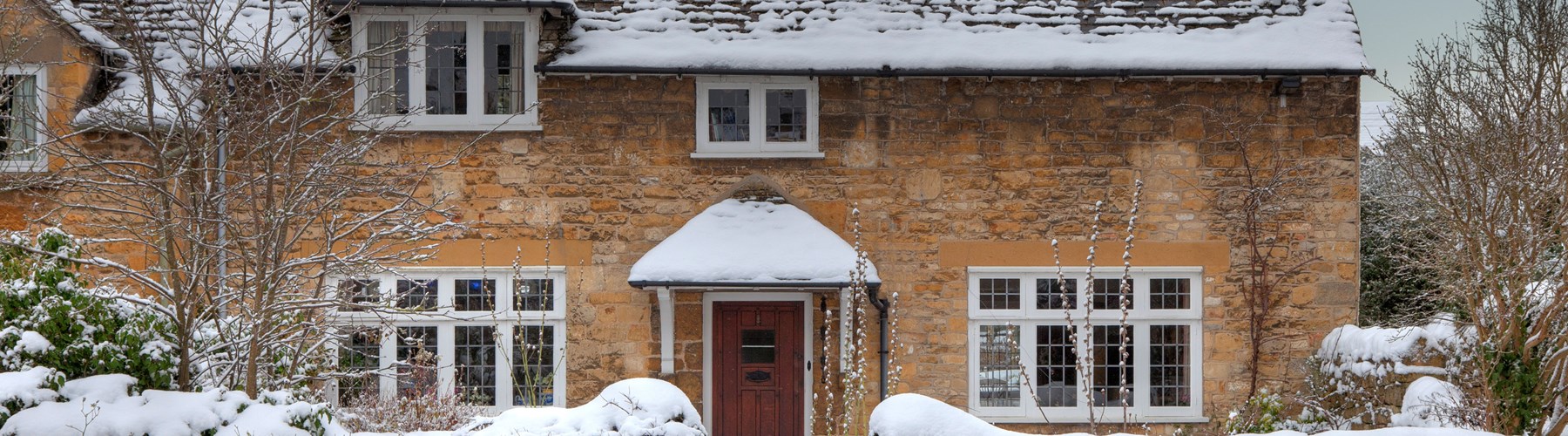
Winter home maintenance checklist
Making sure your home is winter-ready not only helps you stay warm and comfortable during the coldest time of the year but can also help prevent expensive damage from adverse weather.
In recent years, insurers have paid out record amounts in adverse weather-related claims, including internal leaks caused by burst pipes.[1]
Home insurance can help with many unexpected problems, but damage that develops over time due to insufficient maintenance is typically not covered. So, follow our tips to prepare your home for winter and avoid unnecessary hassle in the long term.
Here’s our simple winter home maintenance checklist to help you avoid unexpected costs during what, for many, is the most expensive time of the year.
In short
Maintaining your home all year round can ensure you stay warm and dry in winter and prevent small issues from becoming unmanageable ones.
Must Know
- Weatherproof the outside of your home
- Check your central heating system works safely and efficiently
- Insulate pipework, water tanks and any gaps around windows/doors
- Prevent damp by ventilating rooms and using dehumidifiers
- Make sure smoke and carbon monoxide detectors are working properly
- Ask a neighbour to check your property if you are away
Outside the home
Your home’s exterior is your first line of defence against the elements, but also the most exposed. To make sure your property is ready to cope with the harsher weather, you should check:
- Gutters and drains – clearing gutters before winter and making sure gullies and drains are clear of leaves and other debris can prevent damage to your roof and/or exterior walls.
- Check your roof for winter damage – look for any missing tiles, loose flashing or damaged pointing and don’t forget to check the felt on your shed or garage. Consider calling in the professionals if you’re concerned about high-level inspections.
- Outside taps and exposed pipes – these could burst or crack in freezing conditions, so fit a tap cover, check for leaks and consider lagging pipework with foam tubes.
- Fences, trees and garden items that could blow loose in storms – high winds can cause havoc, so make sure fences are in good condition and items such as garden furniture are secure.
Plumbing and heating
Properly maintained heating is essential in winter and not just to keep you warm. In extreme conditions, pipes could burst and cause costly and extensive damage to your property. Fortunately, there are many things you can do to prevent this, including:
- Lagging pipework (insulating pipes with a protective material) and keeping the heating on low (instead of off) when you are away to prevent frozen pipes
- Finding and testing your stopcock to make sure you can cut off the water supply in case of a burst pipe
- A boiler service before winter is always a good idea. The Energy Saving Trust recommends doing this annually[3] to make sure everything is working safely. Always use a Gas Safe-registered engineer to carry out the work
It’s also worth making sure your heating is working as efficiently as possible, which will not only save you money but also prolong the lifespan of your central heating system. Consider bleeding radiators[2] annually and reducing the flow temperature to improve your boiler’s efficiency.[4]
Keeping warmth in and damp out
Winter home maintenance isn’t just about preventing damage and saving money – it’s also about making sure your home can protect you from the elements. As temperatures drop, keeping the heat in and the cold out matters more than at any other time of year.
Up to a quarter of your home’s heat can be lost if the roof isn’t insulated,[5] so draught proofing your home is a must. Adding extra loft insulation is a relatively easy, cost-effective way to help your home retain heat. You should make sure your loft water tank and pipework are insulated too.
According to government estimates, nearly a fifth of the heat in UK homes is lost through windows.[6] So replacing them with double- or triple-glazed options or applying insulation tape, weatherstripping or a foam sealant can all help keep the heat inside. For more tips, see our guide on how to winter-proof your windows.
Staying dry is important too, so you should look at preventing damp and condensation in winter. Damp can also cause damage and produce mould that can trigger allergic reactions and asthma attacks, along with irritants and other toxic substances.[7] You should:
- Ventilate your rooms daily
- Use dehumidifiers
- Dry your clothes in a well-ventilated area
- Use extractor fans when cooking
Safety checks
During winter, the risk of house fires rises because people use solid-fuel and electric heating more, and even light candles, so it’s worth running a few safety checks before the season starts.
- Carry out smoke and carbon monoxide alarm checks to make sure they are working (if in doubt, install new batteries as well)
- If you have a stove or open fireplace, getting your chimney swept is an essential safety step[8] to prevent the build-up of flammable substances and reduce the risk of carbon monoxide poisoning
- Avoid putting any type of electric heater near clothes, paper, furniture or other household items
- Unplug appliances such as electric blankets before going to bed unless they have an automatic shut-off option and you can adjust the heat [9]
If you’re going away
Protecting your home when away in winter is important too, especially if, like many, you are planning to visit relatives or friends. There are several steps you should take to reduce risks and secure your home:
- Turn off the main water supply at the shut-off valve to reduce the risk of pipes bursting
- Adjust your heating settings – you should leave it on at a minimal level to prevent pipes from freezing
- Ask a neighbour to check the property from time to time
Your home insurance should still cover damage while you’re away, unless you plan to be gone for more than 60 days. Check your policy document to see what’s covered.
What your home insurance can cover
While prevention is always better than cure, especially when it comes to home damage, adverse weather can sometimes make repairs unavoidable. Thankfully, your home insurance should cover most things as standard.
What’s generally included:
- Subsidence, ground heave and landslip
- Storm
- Flood
- Leaking or freezing water and leaking oil
- Theft
- Fire
- Damage by moving objects
Home insurance generally doesn’t cover:
- Wear and tear or storm damage to fences, gates, trees and hedges
- Damage caused by wind speeds under 55mph
- Damage caused by wear and tear
- Damage due to a lack of maintenance, gradual damage or rot
For a more detailed look at what’s covered and what’s not, always check your policy document.
Winter home checklist
- Secure the exterior of your building, including outside structures, fixtures and furniture
- Make sure your internal and external pipework is insulated against freezing temperatures
- Ensure your central heating is working safely and efficiently
- Fit loft insulation and prevent draughts coming in through windows and doors
- Check for leaks and take steps to prevent damp
- Test fire and CO alarms
- Take care with electric heaters and blankets
- Sweep your chimney if you have one
- Ask a neighbour to check on your property if you are away
Find out about Rias home insurance.
Sources
[1]https://www.abi.org.uk/media-hub/news-post/weather-damage-insurance-claims-worst-on-record|
[2]https://www.ageas.co.uk/solved/your-home/how-to-bleed-your-radiators/
[3]https://energysavingtrust.org.uk/boiler-service-explained/
[4]https://energysavingtrust.org.uk/should-i-turn-boilers-flow-temperature-down/
[5]https://energysavingtrust.org.uk/advice/roof-and-loft-insulation/
[6]https://assets.publishing.service.gov.uk/government/uploads/system/uploads/attachment_data/file/587337/DECC_factsheet_11.11.16_GLAZING_LOCKED.pdf
[7]https://www.nhsinform.scot/healthy-living/indoor-health/damp-and-mould-indoors/
[8]https://www.hetas.co.uk/consumer/advice-hub/advice-articles/why-do-i-need-my-chimney-swept/