
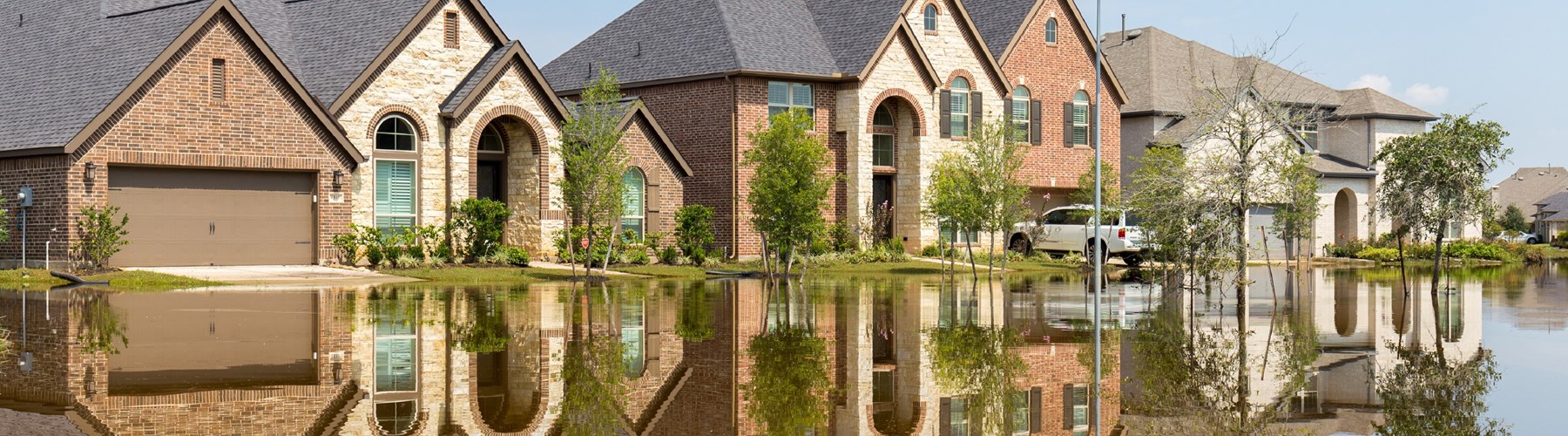
Flooding – is your home at risk?
By 2050, as many as 8 million properties in England – about one in every four – could face the traumatic effects of flooding from rivers, surface water and the sea, putting many families and communities at risk. Currently, 6.3 million homes are at risk of flooding.1
Living in a high-risk flood area can be worrying, but having home insurance with flood cover can help protect you. Without it, if the worst happens, you could face expensive repairs that feel overwhelming and unaffordable. The average flood payout from insurers to homeowners in 2025 was £30,000 – 60% higher than the previous year.2
If you’re not sure whether you’re in a high-risk area, you can find out using the government’s check for flooding web page. If you are, you can learn about the risk in advance by signing up for free flood warnings by email, phone or text, and by asking the Environment Agency for a flood history report (England only).
Must know
While heavy rainfall and surface water flooding pose the greatest flood risk to homes in England, three in four people at risk are unaware that their property could be affected.3 It takes 2 minutes to check your postcode.
In short
Sign up for flood warnings wherever you live:
- England – Get flood warnings and review your flood risk
- Scotland – Register with Floodline and find live flooding information
- Wales – Sign up for flood warning messages and check your risk
- Northern Ireland – Report flooding or call 0300 2000 100
What is flood insurance?
Flood cover is included in your home insurance policies. Buildings insurance protects the structure of your property, as well as fixtures and fittings, fixed kitchen units and bathroom suites – anything you can’t take with you when moving home. Contents cover protects your movable belongings, such as laptops, jewellery, furniture, and the contents of your freezer that you or your family own or are responsible for.
If you're a homeowner, having both buildings and contents insurance provides more comprehensive protection against flood damage. Your policy documents will give you details, such as whether the insurer would offer alternative accommodation if your home were uninhabitable for a time. This is usually included as standard, but different limits may apply, depending on your insurer.
Will I have to pay more?
When insurers calculate how much your premium should be, they try to predict the likelihood of you making a claim. Living in a high-risk flood area may mean you are charged more than be in a low-risk area.
Flood Re was launched in April 2016 to help make home insurance more affordable for those in high-risk areas, or those who have suffered previous flood damage. Insurers like Rias partner with Flood Re to pass the flood cover of home insurance policies bought by their customers to the not-for-profit organisation. It’s worth noting that not all properties can be ceded to Flood Re; for instance, those built on or after 1 January 2009 are not eligible.
The premiums charged by Flood Re are capped based on Council Tax band. Reforms announced in July 2026 will make insurance fairer and more affordable for lower-income households and renters, with insurers expected to pass on the savings. From April 2027, Flood Re will halve the premium it charges insurers for contents-only policies on homes in Council Tax Bands A and B – around 45% of UK homes – from £52 to £25 a year.
Flood Re is scheduled to cease operating in 2039, with a transition plan in place to give the UK time to reduce the risk of flooding. It is currently performing well, with 99% of a flood-risk sample obtaining more than 15 quotes from comparison sites and 98% of those with recent flood claims receiving more than 5 quotes.5
How can I protect my home?
Prevention is better than cure, which is the ethos behind the Flood Re scheme, Build Back Better, which RIAS joined as part of Ageas Retail Limited. It offers up to £10,000 for flood resilience measures in addition to repair costs.6
Here are a few things you can do to protect your home as much as possible from flood damage, as well as making sure you have adequate home insurance:
- Get an electrician to fit electrical sockets, wiring and appliances higher up your walls to reduce damage and safety risk if water gets in.
- Consider buying a pump to deal with groundwater but only use it if the flood level is lower than the water inside the house.
- Add a waterproof coating to your walls and fit water-resistant skirting boards.7
- Select a tiled floor with a rug that you can easily move, rather than a carpet.6
- Buy removable barriers and seals,6 and keep them in your garage or shed, so they’re close to hand. Make sure they’re BSI kitemark certified.
- Put a contingency plan in place and inform every member of your household, so everyone knows exactly what to do if flooding looks imminent.8
- Ask a drainage specialist about fitting non-return valves to prevent sewage from backing up into your home.8
Before changing anything in your home, it’s worth speaking to your insurer, especially if it involves building work, such as moving sockets and electrical equipment or adding waterproof rendering.
Get a quote for Rias home insurance.
Sources:
[1] https://www.theccc.org.uk/publication/progress-in-adapting-to-climate-change-2025/
[2] https://www.abi.org.uk/news/news-articles/2026/2/adverse-weatherpushesproperty-insurance-payouts-to-6.1-billionin-2025/
[3] https://www.floodre.co.uk/ara-2024/transition/ (Bucket 2, Indicator 6)
[4] https://www.floodre.co.uk/10yearanniversary/
[5] https://www.floodre.co.uk/ara-2024/transition/ (Bucket 3, Indicator 9)
[6] https://fpsenvironmental.co.uk/build-back-better-launched-by-flood-re/
[7] https://www.gov.uk/government/publications/floodproof-an-action-plan-to-build-resilience/floodready-an-action-plan-to-build-the-resilience-of-people-and-properties
[8] https://hoa.org.uk/advice/guides-for-homeowners/i-am-improving/how-can-i-flood-proof-my-home/