
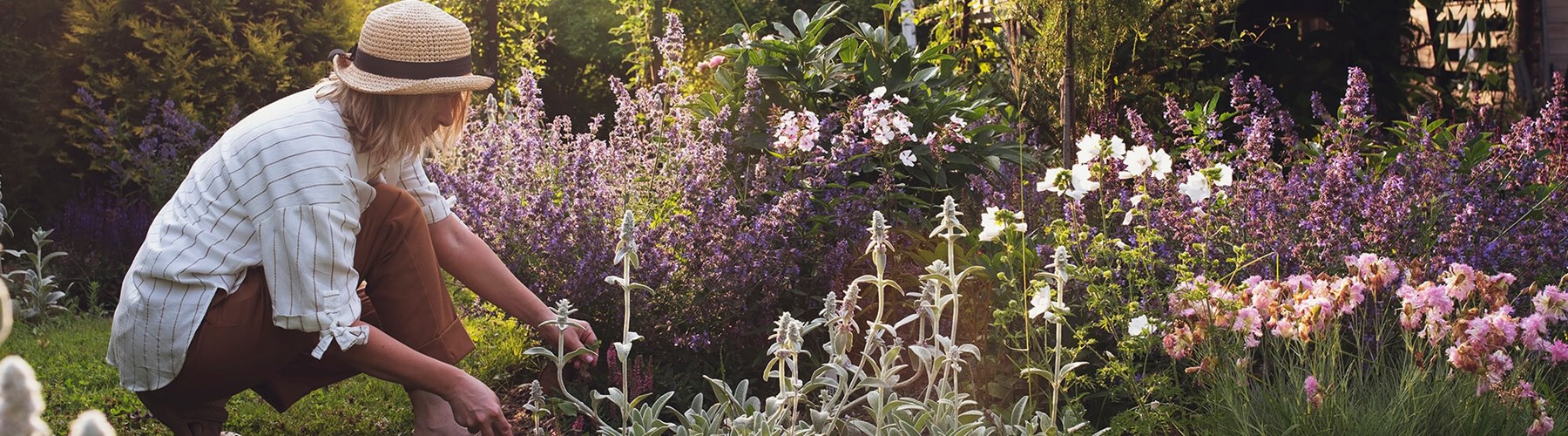
Get your home ready for summer
UK summers have become pretty confusing. We either have too little rain, and the soil shrinks, affecting both plants and building foundations. Or there’s too much rain, soaking into buildings and waterlogging the soil, which many trees and shrubs don’t like.
Even though the weather can be unpredictable, with a little bit of preparation, you can keep your house and garden in great shape and enjoy them all summer long.
Here are a few easy things you can do to get your home ready for summer.
Must know
During the day, keep windows, blinds and curtains closed on sun-facing sides of your home. Then open everything at night to flush the heat out.1
In short
|
Get your home ready for summer by:
|
Home: Walk around the outside
Take a walk around your house to look for any wear and tear, make a note of which jobs you'll tackle first.
Inspecting and fixing the basics is a good starting point:
- Clear your gutters and downpipes
- Check your roof for loose or cracked tiles
- Inspect the exterior walls for dampness
- Ensure fences are in good shape
- Prune shrubs away from exterior walls
Remember to assess any decking for splits and lifted edges. The Timber Decking and Cladding Association (TDCA) recommends a deep clean every spring.2
If there’s no safe way for you to check the roof yourself, it might be a good idea to have a tradesperson inspect it.
Keep cool inside
You’ll want to keep your home as cool as possible in the summer. A top-floor flat can be sweltering in a heatwave or if you live in a home with windows that you can’t open fully. Many people, especially the sick, elderly and very young, should be protected from extreme heat.1
In hot weather, Public Health England and the Government advise the following cooling techniques:
- Install or close wooden or fabric curtains, shutters or awnings to keep out the heat (avoid metal blinds, as they retain it).
- If it’s safe to do so, open windows at night when it’s cooler, but close them during the day.
- Use electric fans to move air when temperatures are below 35°C (above this and you’re just moving warm air around).
- Turn off the heating and any equipment that heats up, such as lights, when they’re not being used.
- If possible, sleep in a cooler part of your home if you find it difficult to nod off in the heat. A downstairs room should be cooler than an upstairs room.
June to August 2025 was the warmest summer on record. If hot spells become the norm, as the Met Office predicts,3 it might be worth investing in long-term measures to reduce overheating. Examples include external shutters, loft and cavity insulation, ceiling fans, or air conditioning.
Consider summer security
Some security advice is evergreen – keep valuables like jewellery and cash out of reach in a safe or secret compartment; do not leave your keys near your door, windows or other obvious places.
But you need to be especially vigilant in the summer, when leaving doors and windows open is more likely to happen. You can do a lot to deter opportunistic criminals, whether you’re indoors, in the garden, or away on holiday.
- Burglars love an open window, especially if they don’t need to break glass and risk attracting attention. On summer days when you want to ventilate your home, but are in the garden, limit how far the windows open with locks or sash stops. Call a locksmith if you don’t have any or aren’t sure how to fit them.4
- A burglar alarm outside your home may also deter criminals. They may also think twice if you have external lights, particularly motion-sensing versions, or home CCTV used alongside good-quality locks.4
- Smart devices, such as cameras and video doorbells, can be hacked. Simple checks include changing the default password to a secure one, enabling multi-factor verification, and installing updates immediately.5
- Other things that can put burglars off include thorny hedges, strong fences with trellis, back gates with robust locks, noisy gravel, and anti-climb paint.4
- Never leave sheds or garages unlocked, and store ladders on their sides, chained or padlocked to a bracket or wall.4
If you’ve been hard at work in the garden, always put away your garden tools safely, as burglars can use them to smash a window to gain entry.
Read more on securing your garden to deter thieves.
Wash and put away your winter essentials
Summer is the time to put away those winter clothes and linens and change the duvet to a lower tog rating. A warm day is also a great opportunity to wash your duvets, pillows and curtains.
Weather permitting and space allowing, the start of summer should mean giving your tumble dryer a holiday and hanging your laundry outside to dry, unless you’re allergic to pollen.6 So, if you haven’t got a clothesline, now may be the time to buy one and start making the most of it.
Refresh your paintwork
If there is some paintwork around your home that needs patching, a warm summer day may be the right time to fix it or arrange for a tradesperson to do it. It’s amazing how a fresh lick of paint can brighten up your house.
It may be a bit of a chore, and you should only do it if you can do so safely, but cleaning your windows and any glass panels on doors at the start of summer can make a huge difference. The warmer weather also gives you a good opportunity to repair and paint any rotten window frames.
Your garden furniture may also need a bit of TLC, especially if you left it outside over the winter months. So have a check, give it a lick of paint, or make any necessary repairs.
Watch out for pests
Wasps and other summer pests may make nests in guttering, loft spaces and the roof. It pays to deal with them early before they become a serious problem. See if you can seal up any cracks in the walls or small holes where pests might hide, if it’s safe to do so.
As temperatures rise, rubbish bins get warmer, and the food inside them rots faster, attracting both rats and wasps, according to the British Pest Control Association (BPCA).7 The BPCA advises:
- Keep bin lids sealed properly
- Replace broken bins
- Place them away from windows and doors
- Put them in the shade
- Empty kitchen bins regularly
- Clean all of your bins
- Put your house name or number on them
- Bag and dispose of fallen fruit in the garden
Gardeners will need to keep an eye out for asparagus beetles, aphids, flea beetles, carrot flies, slugs and snails, mildew, moths, and birds and wasps that love soft fruit.8
Garden: Tackle those priority jobs
Before you start spending time outdoors, check any garden equipment and toys, such as swings, for potential hazards, like rusty bolts, and make sure they’re in good condition. Then you can prioritise your gardening tasks by month.
Here are some tips from the Royal Horticultural Society (RHS):
June – plant summer baskets and bedding plants, mow the lawn, prune spring-flowering shrubs, and shade your greenhouse when it starts to warm up.9 Ward off summer pests by covering plants with mesh or removing slugs and snails in the evening.8
July – deadheading plants is another top job to ensure repeated flowering. The RHS also recommends feeding and watering them to ensure continuous blooms. Water plants in containers from a butt or recycled water from the home, especially if it’s a dry summer.10
August – if you’re on holiday, see if friends and relatives will water your plants and look after your garden while you’re away, people popping in and out will also show any potential burglars that your home is being watched. Priority gardening jobs include pruning wisteria, apples and pears, and deadheading.11
Learn how to keep your lawn looking green and healthy.
Water wisely
Watering wisely is essential11 and can make a real difference during a drought. Domestic demand fell by 10% (32 Olympic-sized swimming pools’ worth of water) when Yorkshire Water introduced a hosepipe ban in 2025.13
Waterwise advises:
- Leave the lawn in dry spells, as it will bounce back
- Add mulch to retain moisture in the soil
- Choose plants that need little watering
- Install a water butt
- Check your taps and toilets for leaks
Cleaning patios and decking
Your patio may need a thorough pre-summer cleaning. Start by brushing it with a broom to remove any dirt.
Instead of using a power washer, which uses a lot of water, try scrubbing the patio with warm water and washing-up liquid, or a 50:50 mix of water and vinegar. However, protect your plants from any vinegary run-off. Rinse the patio with clean water.14
Mild soap and water work on decking, too. A power washer may damage the deck’s surface, so wash it with soap and water instead. The TDCA also suggests applying a water repellent coating at the end of the summer.2
Taking these simple steps will help you keep your garden blooming and its items clean so that you can enjoy it this summer and beyond.
Summer barbecues and fire pit safety
Take the time to clean your barbecue grill well in advance of the summer. You’ll feel pleased as punch for your forethought when it comes to barbecue time.
It’s easy to underestimate how long it takes for barbecue coals to reach the right temperature to cook with, and if you forgot to clean the grill at the end of last year’s BBQ season, your feast could be delayed further.
Remember to keep barbeques, fire pits and chimineas well away from fences, foliage, sheds and buildings and never leave them unattended. Be sure to keep a bucket of water, sand or a hosepipe nearby in case of an emergency and fully put out any fires once you’re done. Experts also recommend not storing your gas cylinders near anything flammable, such as wooden sheds.15
The UK’s Fire and Rescue Service is seeing more fires caused by weed burners and advises using a chemical weedkiller instead during a dry summer.15
Managing hay fever and allergies
Pollen can affect people with hay fever from January to October, and grass pollen, which usually begins in the summer, is the most common culprit, according to Allergy UK. Weed pollen tends to peak in late summer.6
If you’re affected, the charity suggests cutting back on outdoor activities early in the day when pollen levels rise with warm air. Keep your windows closed when pollen counts are high and wear a mask if you’re travelling or mowing the lawn – better yet, see if someone else can mow it for you.
Allergy UK also advises those with hay fever or eczema to use low-allergen mulch and avoid using a strimmer or leaving grass cuttings on the lawn.
Wildlife in the garden
The summer can be tough on wildlife, and not just if it’s a dry one. The RSPB has asked people to pause feeding birds seeds or peanuts from 1 May to 31 October to help prevent the spread of trichomonosis. The UK’s greenfinch population has declined by over 65% over three decades due to this disease.16
Keep food dry and only put out limited amounts, adjusted according to demand. If you have a bird bath, it’s essential to clean it daily using tap water. Find out more on the RSPB website.
The RHS is also encouraging the UK’s 41 million gardeners to ‘bring nature home’ to protect biodiversity and fight climate change. It suggests letting a patch of lawn grow long, making a wildlife pond, planting a flowering tree, sowing nectar-rich annuals and planting a mixed native hedge.
In hot weather, BBC Countryfile suggests leaving out small bowls of water (not food) for hedgehogs, gently helping exhausted bees onto a flower where they can feed on nectar and restore their energy, planting nectar-rich flowers to encourage butterflies, and keeping ponds clean.
Whatever the weather is like this summer, if you’re looking to cover your home, see what Rias could do for you when you get a home insurance quote today.
[1] https://next.shropshire.gov.uk/public-health/healthy-shropshire/stay-safe-and-well-this-summer/beat-the-heat-staying-well-in-hot-weather/
[2] https://tdca.org.uk/timber-decking/deck-maintenance/
[3] https://www.metoffice.gov.uk/about-us/news-and-media/media-centre/weather-and-climate-news/2025/summer-2025-is-the-warmest-on-record-for-the-uk
[4] https://www.thamesvalley.police.uk/SysSiteAssets/media/downloads/thames-valley/advice/home-security-guide2.pdf
[5] https://www.ncsc.gov.uk/blog-post/smart-devices-law
[6] https://www.allergyuk.org/wp-content/uploads/2022/03/Pollen-and-Moulds-in-the-Garden.pdf
[7] https://bpca.org.uk/news/Page-23/10-tips-for-keeping-rats-and-wasps-out-of-your-bins-this-summer/206255
[8] https://www.rhs.org.uk/advice/grow-your-own/in-month/june-jobs
[9] https://www.rhs.org.uk/advice/in-month/june
[10] https://www.rhs.org.uk/advice/in-month/july
[11] https://www.rhs.org.uk/advice/in-month/august
[12] https://waterwise.org.uk/how-to-save-water/
[13] https://www.gov.uk/government/news/national-drought-group-meets-to-address-nationally-significant-water-shortfall
[14] https://www.gardenersworld.com/how-to/maintain-the-garden/how-to-clean-a-patio/
[15] https://www.merseyfire.gov.uk/media/2209/garden-outdoor-safety-030621.pdf
[16] https://www.rspb.org.uk/whats-happening/news/how-to-help-garden-birds