
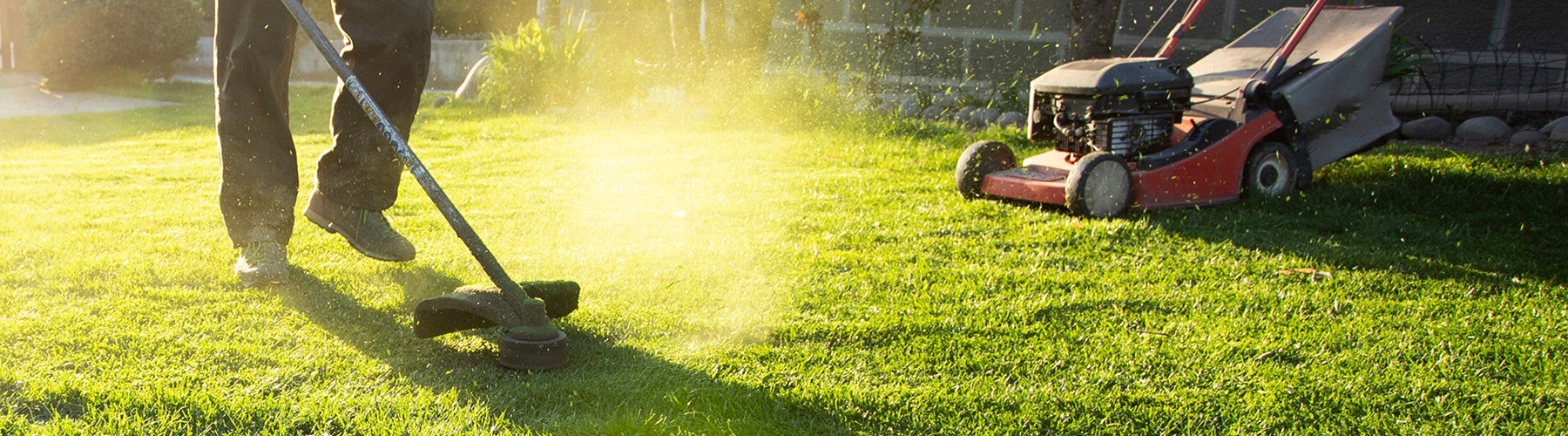
How to keep your lawn looking green and healthy
You don’t have to be a gardening expert to create a healthy, lush garden lawn. With a little care and attention, anyone can cultivate that special green space to relax and unwind in.
Lawn perfection, however, requires some planning and regular maintenance. Here are our top tips to help you achieve it.
Must know
Never mow wet or frosty grass, as this can damage your turf and compact the soil.
In short
|
Mowing
Regular mowing will keep your lawn in good health and looking great by eliminating unwanted weeds and encouraging denser turf. How often you mow depends on weather conditions and the speed at which your grass is growing:1
- Spring and autumn – the average lawn needs mowing weekly or fortnightly. However, you might decide you want to take part in No Mow May (more on this later) and stop mowing altogether to encourage wildlife.
- Summer – once a week is fine, but be careful to mow only once a fortnight or even less during dry weather periods, and raise the cutting height of your mower to let the grass get longer. Cutting too short in drought conditions can weaken the grass and make it more vulnerable.
- Winter – mowing isn’t necessary but set your cutting height high if you do. Never mow if the ground is very soft, wet, or frozen.
Some people wonder what to do with grass clippings. If they’re short, they can be left on your lawn to work as a natural fertiliser.2 If the grass is longer, then clippings may need to be removed, as they take longer to break down and can block sunlight from reaching the grass underneath. For more tips on mowing your lawn, the Royal Horticultural Society is a great resource.
There are, of course, many different types of mowers – from simple push mowers for smaller lawns to ride-on mowers for much larger grassed areas – but did you know there’s even a museum dedicated to lawnmowers!3
See our guide to home insurance and your garden.
Managing moss
Moss can be a nuisance on a damp, poorly drained lawn. It can be frustrating to watch moss grow more abundantly than the grass itself.
Scarification is the answer for most lawns, which simply means raking out the moss. Typically, a spring-tine rake (or springbok rake) is the best tool to use. You can do this in autumn or spring. If you have a larger lawn, you may want to hire a mechanical scarifier rather than just using a rake.4
You can also allow more sunlight on the lawn, drying out the damp soil, by removing overhanging tree branches.5
Alternatively, you could apply a weedkiller (moss killer) in autumn or spring. The moss will die and then you’ll need to rake it away. Make sure you follow the instructions on your chosen product.
Ultimately, though, if you have a moss problem, you need to get to its root cause, as it will just keep coming back. You can usually prevent moss by encouraging grass growth in its place, which you can achieve through feeding and regular lawn maintenance.
Over-seeding
Once you’ve got rid of any moss or weeds, you’re likely to be left with patches in your lawn. Don’t worry, this is normal. Your next move is overseeding (or reseeding), which is the process of sowing new seeds into an existing lawn. You can do this in early autumn or mid-spring.
To get a lawn that suits your needs, choose the right seed mixture, available online or from DIY and garden retail outlets. The lawn seed container should include instructions on whether it’s best for a general-purpose lawn, a luxury lawn or a shady lawn.
Dig and weed the lawn patches you want to repair, then sow the seed and lightly rake the sown area to cover most of the seeds with soil. If no rain is forecast for a few days, water gently with a light spray, ensuring you do not dislodge the seeds.6
Feeding
As with any plant, it’s good to feed them occasionally. Adding fertiliser – concentrated sources of plant nutrients – will help keep your lawn lush and green and keep weeds and moss at bay.
You would usually feed your lawn twice a year, in spring and autumn, when the soil is moist, or when the forecast is for rain.
Rather than artificial feeds, consider using organic or homemade fertilisers.7 You could, for example, make your own compost – the National Trust has some great tips8 on how to do it.
Watering
Contrary to popular belief, established lawns can usually withstand dry summers without watering, unless there are extreme drought conditions. Even if they turn brown and dry, they’ll usually recover their green glow when the rain starts again.
So, don’t worry if there’s a hosepipe ban, a well-established lawn should be fine – plus you’ll be helping the environment by saving water. Did you know9 the average hosepipe uses 170 litres of water every 10 minutes, which is as much as 19 flushes of a toilet!
However, bear in mind that the exception applies only to a new lawn, which will require watering throughout its first season.
Check out our useful tips: How to save water at home and in the garden.
Aeration
Aeration is simply a way of perforating the soil with small holes to improve drainage and allow air, water, and nutrients to reach the grass roots.
Ideally, you should try doing it once or twice a year in the spring or autumn when the grass is growing. It will help the roots grow deeply and produce a stronger, more vigorous lawn.
The size of your garden usually determines the tools you use for aeration. For very small gardens, you can even buy aerator shoes, spiked footwear attachments that create holes as you walk.
Typically, however, the tool of choice will be a spiked aerator on a roller that you push or pull along.
Weed control
We can’t forget weeds, the bane of many gardeners, as they compete with grass for sunlight, water and nutrients, and certainly don’t look the part if you’re going for that manicured look.
If you do want to rid your garden of weeds, there are several non-chemical options you should try before you reach for the weedkiller. For a start, good lawn maintenance – feeding, scarifying and so on – will encourage strong grass growth, making it harder for weeds to compete. The Royal Horticultural Society has advice on identifying and controlling weeds.10
You can remove the likes of dandelions or daisies with a hand fork and rake over or mow out any others. Another option when combating weeds naturally is to avoid mowing your lawn too short, as this can weaken the grass and allow some weeds to grow.
You might hate weeds, but did you know that 28 March is National Weed Appreciation Day?11
Get a soil sample
If you’re really committed to creating a super lawn, why not have your soil tested to better understand any underlying problems?
For example, you can request a soil sample kit from the RHS. For a fee, they’ll analyse soil texture, pH, organic matter and nutrients, providing a detailed interpretation of the results and fertiliser recommendations.
Attract wildlife
Consider giving over at least some of your lawn to wildlife. If you stop mowing and tending to parts of your lawn, you can create a meadow-like home12 for all sorts of creatures.
Try adding wildflower meadow mixes to these areas and they’ll make a beautiful contrast to your lush lawn in summer, while also attracting pollinating insects and other wildlife.
You might decide to do this just temporarily by joining in with the increasingly popular annual campaign called No Mow May?13
Find out more about our home insurance.
Sources
1 https://www.rhs.org.uk/lawns/mowing
2 https://www.rhs.org.uk/garden-jobs/how-to-deal-with-garden-waste#
3 http://www.lawnmowerworld.co.uk
4 https://www.uklawncare.net/advice_for_homeowners/lawn_care_advice_and_treatments.aspx
5 https://solvepestproblems.oregonstate.edu/lawn-problems/moss
6 https://www.rhs.org.uk/lawns/repairing
7 https://www.rhs.org.uk/garden-jobs/fertilisers
8 https://www.nationaltrust.org.uk/discover/gardening-tips/how-to-make-your-own-compost
9 https://www.tameside.gov.uk/EnergyEfficiency/Top-Tips-–-July-Avoid-Using-Hosepipes
10 https://www.rhs.org.uk/weeds
11 https://www.thereisadayforthat.com/holidays/usa/national-weed-appreciation-day
12 https://www.rhs.org.uk/wildlife/lawn-and-mini-meadow-habitats