
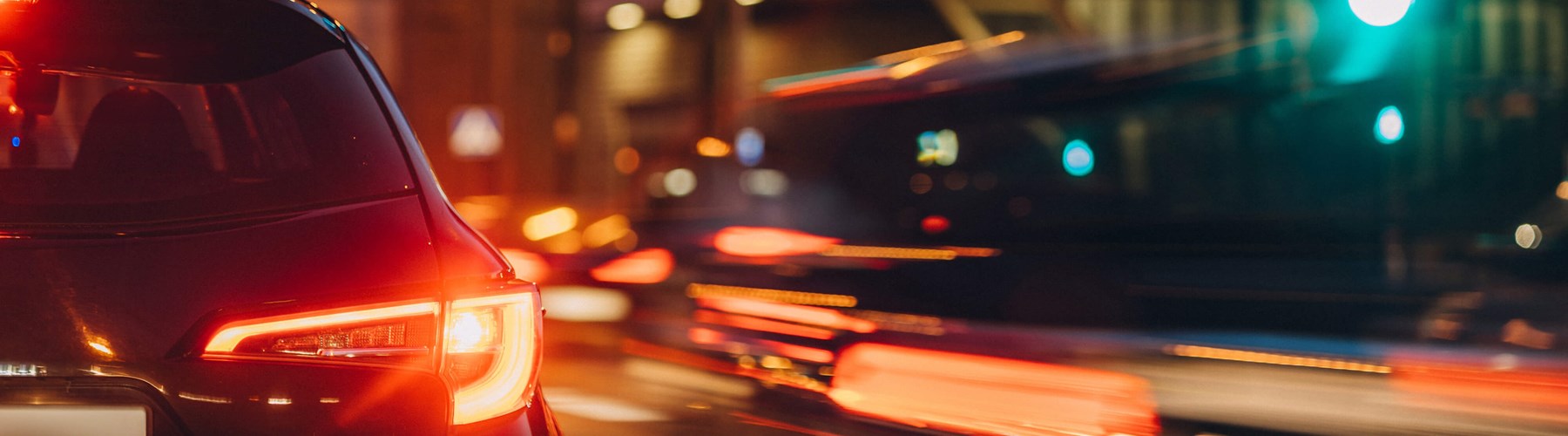
Our guide to driving in the dark
Driving in the dark reduces your ability to judge speed and distance, so it’s not surprising that 4-in-10 drivers are nervous about getting behind the steering wheel once the sun has gone down.1
During the winter months, darkness descends early while roads are still busy with traffic. Cyclists and pedestrians, as well as other hazards such as sharp bends or stationary vehicles, are challenging to see.
At night, throughout the year, emptier roads can give a false sense of security, leading some motorists to think fewer cars mean safer conditions. However, drivers should take great care, as tiredness can make the dangers of driving in the dark much worse.
In this guide, we share driving safety tips for driving in the dark.
Must know
You should always reduce your speed when driving in the dark, as it is more difficult to see other road users.2
In short
- Don’t drive in the dark if you don’t have to – change your plans
- Plan your route, bearing in mind that some roads close for repairs at night
- Check that all your car’s lights are working and clean
- Take regular breaks to avoid tiredness if driving at night
- Use dipped headlights to avoid dazzling drivers when other vehicles approach
- Keep interior lighting levels low
Plan ahead
Think about the journey you have in front of you. If it’s a long journey, why not share the driving? Ensure all drivers are insured to drive your vehicle, so check that their insurance policies cover them. If they don’t, you could ask your insurer if you can add them to your policy as a temporary driver.
When making an unfamiliar journey, check the Met Office for detailed weather forecasts and the relevant national transport authority websites, such as National Highways, for live road conditions before taking the route your sat nav is suggesting.
Bear in mind that some motorways and roads may close at night for repairs, with minimal disruption.
Finally, let someone know where you’re going and what time you expect to arrive, this will make it easier to find you at night if you have any problems.
Want to add a driver to your insurance policy? Find out more about managing your car insurance.
Consider other options
If you don’t feel confident about driving at night, don’t do it. Change your plans so you can drive in daylight, or use public transportation like trains, buses, or coaches, as well as taxis or ride-sharing services.
Check your car is roadworthy
Before setting off, make sure your car has enough fuel and oil, and pump your tyres to the correct pressure. Your car’s lights need to be working and clean. That includes full beams, dipped lights and rear lights, and you should clean your windows and mirrors, too.
For more helpful guidance on looking after your car, read a run-down of our top 10 tips on winter car maintenance.
How to beat tiredness
The Government road safety campaign Think! says motorists should avoid long journeys between midnight and 6 am, when natural alertness is at its lowest.3 However, that’s not always possible, so when driving at night:
- Make sure you’re well rested and take regular breaks to stave off tiredness. It’s recommended that drivers take a minimum break of at least 15 minutes after every two hours of driving.4
- Dehydration can cause fatigue, so keep a bottle of water within reach. Coffee or energy drinks can provide a temporary boost, too.
- Keep the temperature inside your car cool. A slightly cooler environment can help prevent drowsiness.
- Listen to upbeat music or engaging podcasts to help keep your mind active.
- Recognise the signs of tiredness. Look out for warning signs, such as frequent yawning or blinking, difficulty keeping your eyes open, drifting into other lanes, missing road signs or exits and struggling to remember the last few miles driven.
- If you feel so tired that you don’t feel able to carry on driving, you should pull over into a safe place as soon as possible. There are plenty of hotels on major roads and at motorway service stations.Many motorway service areas also allow overnight parking, but they have time restrictions and charges.
- Do not stop on a motorway hard shoulder, as this is dangerous and could lead to a fine and penalty points on your driving licence.5
Beware headlight glare
Headlight glare, or dazzle, while driving in the dark, can be dangerously disorienting, and many motorists believe the problem is getting worse.1
A dirty windscreen can make glare worse by scattering light from oncoming vehicles, making it even harder to see clearly. To stay safe, regularly clean both the inside and outside of your windscreen.
To counter headlight glare, try looking slightly to the left and focus on the white line at the edge of your lane. It helps you stay in your lane without staring straight into a blinding beam.
In addition, remember that most rear-view mirrors come with a dimming feature or ‘night mode’ that helps reduce glare from cars behind you. It is a small switch or lever beneath the mirror.
To avoid dazzling other drivers with your own full-beam headlights, make sure you dip them when another vehicle approaches.
While not quite as distracting, a bright dashboard or interior light can make it harder to see clearly, so keep brightness settings lower when driving in the dark and avoid using your cabin light.
Fog lamps should only be used when visibility is severely reduced. It’s actually against the law to use fog lamps in clear conditions (day or night).6
Adjust the way you drive
The Highway Code says that driving at speeds too fast for the road and traffic conditions is dangerous and you should always reduce your speed when driving in the dark, as it is more difficult to see other road users.
Slowing down will give you enough time to react to hazards, but try to maintain a steady speed, as accelerating and then braking could confuse drivers behind you.
The roads might be quieter at night, but make sure you stay focused at all times. Don’t let your passengers distract you and, of course, definitely don’t use a mobile phone, which is illegal at any time of the day.7
The Royal Society for the Prevention of Accidents points out that drivers’ eyes need time to readjust to darkness when coming out of brightly lit areas,8 such as motorway service stations or roads with streetlights. It also warns motorists to be especially careful when overtaking at night, remembering that it’s more difficult to judge speed and distance.
Is your vision suited to driving at night?
Driving in the dark is a challenge for all drivers. Still, it’s especially true for older drivers and anyone with deteriorating eyesight, because their eyes are more likely to struggle to adjust. They may also find it harder to pick out colours.
Failing eyesight can be a gradual process, so it is essential to have your eyes tested at least every two years, or straight away if you notice a problem. Poor vision means you may miss seeing and reacting to hazards, such as road debris, other vehicles and sudden changes in traffic movement, making yourself particularly vulnerable at night.
You are entitled to a free eye test on the NHS9 if you are over 60 or are over 40 and your mother, father, sibling or child has been diagnosed with glaucoma
Regardless of your vision, you should never wear dark or tinted glasses while driving at night.
Find out more about our car insurance.
Sources
- https://www.rac.co.uk/drive/news/motoring-news/drivers-concerned-about-dazzling-headlights/
- https://www.highwaycodeuk.co.uk/control-of-the-vehicle.html#:~:text=125,always%20reduce%20your%20speed%20when
- https://www.think.gov.uk/advice-for-road-users/#all-road-users
- https://www.gov.uk/guidance/the-highway-code/rules-for-drivers-and-motorcyclists-89-to-102
- https://nationalhighways.co.uk/road-safety/the-hard-shoulder/
- https://www.gov.uk/guidance/the-highway-code/driving-in-adverse-weather-conditions-226-to-237#:~:text=Rule%20229,in%20icy%20or%20snowy%20weather
- https://www.met.police.uk/advice/advice-and-information/rs/road-safety/driving-mobile-device-use/
- https://www.rospa.com/siteassets/pages/road-safety/road-safety-resources/free-road-safety-information/employers/safer-driving-for-work-handbook.pdf
- https://www.nhs.uk/nhs-services/opticians/free-nhs-eye-tests-and-optical-vouchers/