
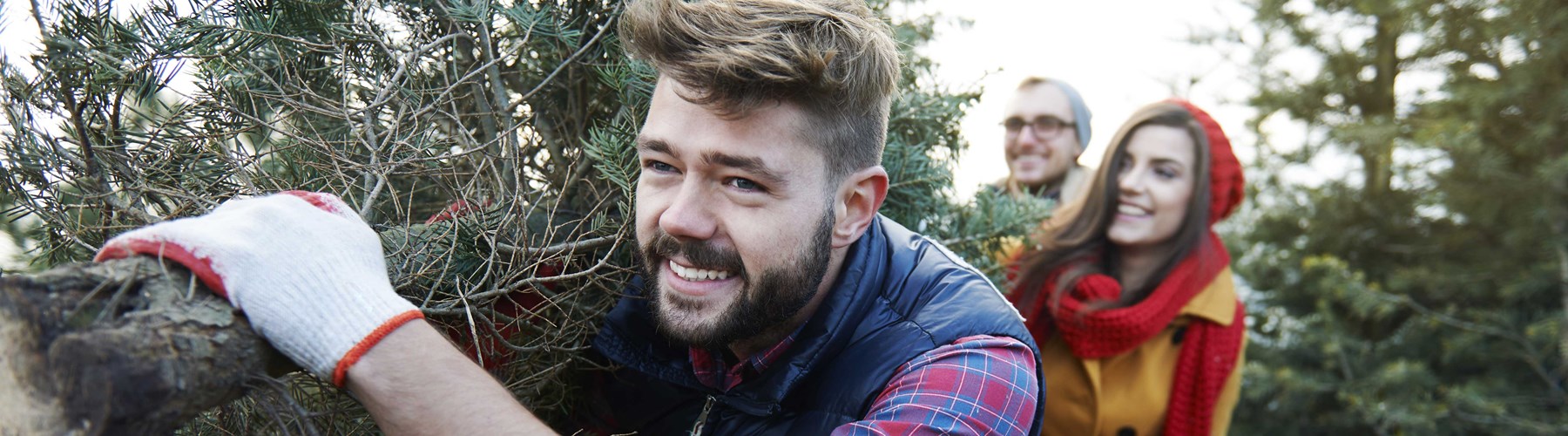
Real vs fake - which Christmas tree is better for the environment?
Perhaps you treasure a real Christmas tree, with its delightful scent and authentic texture that brings a festive warmth to the season. Or would you prefer a hassle-free artificial tree that’s less messy, saves money, and even comes with built-in fairy lights?
Choosing between a real and fake tree is not just about smell versus convenience – it also influences climate, biodiversity and your carbon footprint. Join us as we delve into the ‘real vs fake’ debate to uncover which tree type champions sustainability and benefits the environment.
Must know
A locally grown, responsibly disposed of real tree has a lower carbon footprint than an artificial tree.
In short
- If you already own a fake Christmas tree, the best advice is to reuse it.
- If you’re buying a new one, choose a real, local, FSC-certified tree and replant it.
Why your tree choice matters for the planet
As Christmas trees must be either grown or manufactured, then transported and disposed of, this will contribute to the release of greenhouse gases into the atmosphere.
Most people in the UK dispose of their natural Christmas tree in early January, when local authorities often arrange for collection or drop-off points for recycling.1 As for artificial trees, they last longer but are not recyclable, and one day they will end up in a landfill.
By considering the environmental impact of all festive traditions, not just Christmas trees, you can contribute to global efforts to reduce our impact on the planet.
Artificial Christmas trees – the pros and cons
In October and November 2024, Statista reports that 61% of UK consumers planned to get an artificial Christmas tree, compared to 20% who planned to put up a real one.2
You might think that reusing an artificial tree is a fairly sustainable way to go. However, according to 3 there’s no correct answer to whether a real or artificial tree is most sustainable.
Arguments against artificial Christmas trees
Most fake Christmas trees are made in China from metal and polyvinyl chloride (PVC), some of which is sprayed with white latex paint to create a synthetic snow effect or laced with pre-lit lights.4 Fake trees that travel like this, for thousands of miles, add to the world’s transport emissions.
Historically, PVC Christmas trees would also contain lead as a stabiliser in the plastic.5 Today, manufacturers are more likely to use tin or barium instead.
Nowadays, trees are more likely to be made using polyethene (PE). They tend to look more natural and are much less likely to contain lead,6 especially when compared to older PVC-based artificial trees.
Arguments for artificial Christmas trees
According to the Carbon Trust, you can’t recycle artificial Christmas trees. However, using one for anywhere from 7 to 20 years, depending on its weight and materials, is a more effective way to reduce emissions than buying a new, real, commercially grown tree every year.3
In other words, the longer you keep and use your artificial tree, the better. If you already have one, simply continue enjoying it for as long as it lasts. And if you really like artificial ones, maybe next time you need a new one, consider picking up a second-hand fake tree. You’ll save some money and help the environment, too.
Real Christmas trees – sustainability and disposal
The UK’s Christmas tree industry sells six to eight million trees a year, most of which are Nordmann fir and Norway Spruce from high-density plantations.7 Real trees smell like Christmas, and picking your tree is a delightful family tradition for many.
The good news is that a real Christmas tree has a lower carbon footprint than an artificial tree, particularly if it is disposed of thoughtfully.3 Why? Well, real trees from the UK don’t require the intensive carbon emissions that it takes to produce and ship artificial trees.
Also, unlike artificial trees, a real Christmas tree naturally absorbs carbon dioxide and releases oxygen during the 10-12 years it takes to grow. It also provides a habitat for wildlife during that time.
Cut vs potted Christmas trees
Although a cut Christmas tree is usually cheaper and lasts over the festivities, you might wonder about the environmental impact of cutting one down for home use.
According to the British Christmas Tree Growers Association, when growers cut down a Christmas tree, they replace it with another seedling, planting up to 10 trees for every average-sized tree that is grown.5
The Carbon Trust suggests looking for Forest Stewardship Council (FSC) certified, locally grown trees that have grown slowly without fertiliser, rather than those from further afield, which increase transport emissions.3
Potted trees are a more sustainable option, but they often don’t survive in a warm room, which can cause stress and damage. The Royal Horticultural Society advises a cool room and bringing living trees indoors the weekend before Christmas and not keeping them in the house ‘any longer than 12 days’. Then grow it in a container, changing up to a larger pot annually.8
How to dispose of your real Christmas tree
A crucial aspect to consider is how you choose to handle your real tree after the holiday celebrations are over. Green disposal options available to you include:
- Replanting
If you don’t want to keep a living tree in a container, you can replant it with its roots still attached as a fantastic way to help the environment and reduce your carbon footprint. - Council collection
During early January, local authorities typically set up convenient drop-off points or special collections for Christmas trees. It’s a good idea to contact your local council to find out what options are available in your area. - Chipping
Drop your tree off at a recycling centre, which will turn it into chippings for paths or turn it into soil. - Treecycling
Some organisations and charities provide ‘treecycling’ services, allowing your old tree to be repurposed in meaningful ways, such as helping to build flood barriers.
The verdict
If you choose to purchase a real tree from local, responsible growers who prioritise planting new trees, and if you dispose of it in an eco-friendly manner, you’ll be making a choice that is kind to the environment.
Sources:
- https://www.bctga.co.uk/news/Real-Christmas-Trees-are-Truly-Green
- https://www.statista.com/statistics/1084764/christmas-tree-puchase-plans-among-uk-consumers/
- https://www.carbontrust.com/news-and-insights/news/the-carbon-trusts-tips-for-a-more-sustainable-christmas-0
- https://www.youtube.com/watch?v=5-n_pPbAYbg
- https://www.lccountymt.gov/files/assets/county/v/1/health/documents/lead_can_lurk_in_yuletide_decorations_1.pdf
- https://www.sciencedirect.com/science/article/pii/S0160412021002476#
- https://www.gov.uk/government/publications/christmas-trees-and-forestry-regulations-in-england/christmas-trees-and-forestry-regulations
- https://www.rhs.org.uk/plants/types/trees/christmas-trees